
This Homemade hamburger helper recipe Is the only weeknight pasta skillet you’ll ever need — and I mean that with my whole heart. We’re talking a creamy, golden, cheesy beef pasta that comes together in one pan, in 30 minutes, with ingredients you already have sitting in your pantry. No mystery seasoning packets. No unpronounceable preservatives. Just real, simple food that tastes like someone put actual love into it. I started making this for my family on busy Tuesday nights, and now they request it constantly. It’s Pure comfort on a plate, and it beats the boxed version every single time. Learn more in our article about Slow Cooked Summer Beef Casserole.

Table of Contents
Here’s what I love most about this dish: it meets you exactly where you are. Tired after work? This has you covered. Feeding picky kids who turn their noses up at anything “fancy”? This wins them over every single time. Short on grocery budget this week? This whole meal costs under $10 to make, feeds four to six people generously, and leaves everyone genuinely satisfied. It doesn’t have to look perfect to taste amazing — and trust me, once that creamy cheddar sauce wraps around every little elbow of macaroni, nobody is looking at the presentation anyway. Learn more in our article about One Pot Lemon Orzo Pasta.
What Is Homemade Hamburger Helper?
If you grew up in the 80s or 90s, you remember the blue box. Hamburger Helper was that iconic American dinner staple — a packet of seasoning and dried pasta that you cooked up with ground beef for a fast, filling meal. It was brilliant in concept: one pan, cheap ingredients, minimal effort. But those little flavor packets are packed with sodium, artificial colors, and ingredients you’d need a chemistry degree to identify. The homemade version? It captures everything that made the original so beloved — the creamy, savory, beefy pasta — while using actual food to get there.
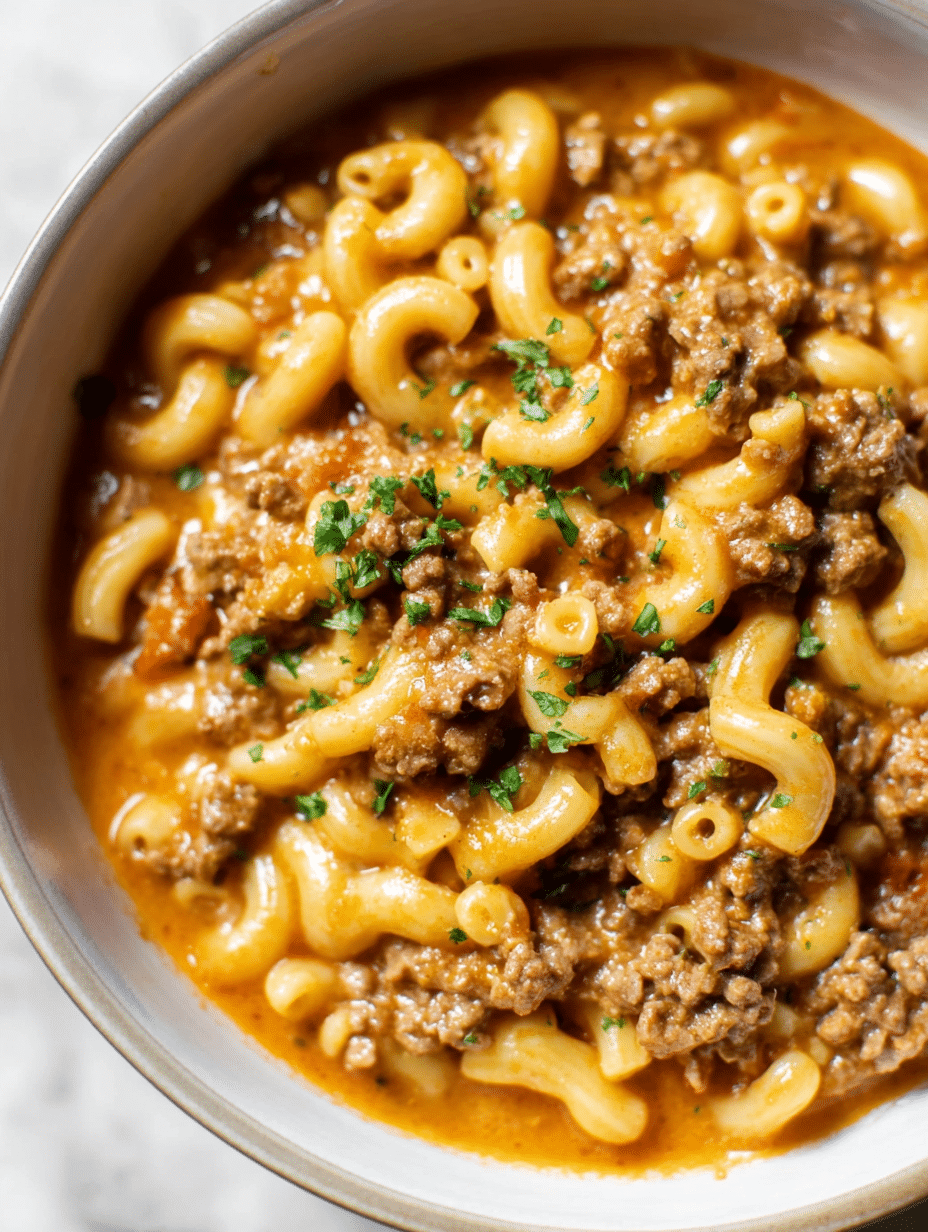
At its core, this is a stovetop skillet meal. Ground beef gets browned with onion and garlic, seasoned with a handful of pantry spices, then simmered together with elbow macaroni in a combination of beef broth and whole milk until everything is tender and saucy. A generous handful of freshly shredded cheddar gets stirred in at the very end, melting into a rich, creamy sauce that coats every single piece of pasta. One skillet. Fewer dishes. Maximum flavor. That’s the whole idea.
One quick note before we get into the ingredients — and this is my hot take, so hear me out: Most recipes for dishes like this use way too much salt. I’ve pulled back on sodium compared to a lot of versions you’ll find online, and I use low-sodium beef broth as the base. You can always add more salt at the end once you taste it. But you can never take it out. Season in layers, taste as you go, and trust yourself.
Recipe At A Glance
- Prep Time: 10 minutes
- Cook Time: 20 minutes
- Total Time: 30 minutes
- Servings: 4 to 6 servings
- Yield: Approximately 6 cups
- Difficulty: Easy
- Method: Stovetop / One Skillet
- Cuisine: American Comfort Food
Why You’ll Love This Recipe
Let me give you the quick rundown, because I think once you see this list you’ll already be halfway to the kitchen. This homemade hamburger helper recipe is Budget-friendly — the entire pot costs under $10 using everyday grocery store ingredients. It’s a One-pan meal, which means cleanup is fast and painless. It’s endlessly Customizable — swap the pasta shape, change up the cheese, use ground turkey instead of beef — and it still works beautifully every time. And because you control everything that goes in, there are No pre-made seasoning packets, no excess sodium, and no ingredients you can’t actually pronounce.
- Budget-friendly — costs under $10 to make
- Family-approved comfort food everyone actually eats
- One pan means easy cleanup
- Fully customizable with different pasta shapes or proteins
- Great for weeknight dinners and meal prep
- No pre-made seasoning packets needed
Ingredients You’ll Need
Nothing exotic here. Every single ingredient on this list lives in a normal grocery store, and most of them are probably already in your kitchen right now. I’ve split them into two groups to keep things organized — your main ingredients and your seasonings. Let’s look at both.
Main Ingredients
| Ingredient | Quantity | Notes |
|---|---|---|
| Ground beef | 1 lb | 80/20 recommended for best flavor |
| Elbow macaroni | 2 cups (uncooked, about 8 oz) | Uncooked; about 8 oz |
| Beef broth | 2 cups | Low-sodium preferred |
| Whole milk | 1 cup | Or evaporated milk for extra creaminess |
| Shredded cheddar cheese | 1½ cups | Freshly shredded melts better — see tip below |
| Diced yellow onion | ½ cup | Approximately 1 small onion |
| Tomato paste | 2 tablespoons | — |
| Diced tomatoes | 1 can (14.5 oz) | Drained |
Seasonings & Pantry Staples
| Ingredient | Quantity | Notes |
|---|---|---|
| Garlic | 3 cloves | Minced |
| Garlic powder | 1 teaspoon | — |
| Onion powder | 1 teaspoon | — |
| Paprika | 1 teaspoon | Smoked or sweet — both work |
| Dried Italian seasoning | ½ teaspoon | — |
| Worcestershire sauce | 1 tablespoon | — |
| Salt | ½ teaspoon | Adjust to taste at the end |
| Black pepper | ¼ teaspoon | — |
| Olive oil or vegetable oil | 1 tablespoon | Only if using lean ground beef |
A note on the cheese: Please, please shred your own. I cannot say this loudly enough. The pre-shredded bags at the grocery store are coated in an anti-caking starch that prevents the cheese from melting smoothly into the sauce. You end up with a grainy, slightly gloppy texture instead of that silky, creamy pull we’re going for. Buy a block of sharp cheddar and run it across the coarse side of your box grater. It takes two minutes and the difference is absolutely worth it.
A note on the milk: Let your milk sit out on the counter for about 10 minutes before you use it. Cold milk splashed into a hot pan can cause the sauce to seize up — and nobody wants that. Room temperature milk blends in smoothly and keeps the sauce beautiful.
Equipment Needed
- Large (12-inch) deep skillet or sauté pan with a lid
- Wooden spoon or silicone spatula
- Measuring cups and measuring spoons
- Chef’s knife and cutting board
- Box grater (if shredding cheese from a block — which you should be)
That’s genuinely it. No stand mixer, no immersion blender, no fancy gadgets. I hate cluttering my counter with unnecessary equipment, and this recipe respects that completely. A good heavy-bottomed skillet is the only real hero here. If yours has a tight-fitting lid, even better — it traps steam while the pasta cooks and helps everything come together perfectly.
How To Make Homemade Hamburger Helper
Start by getting your 12-inch skillet over medium-high heat. You want it genuinely hot before the beef goes in — not smoking, but warm enough that the meat sizzles the second it hits the pan. Add your 1 lb of ground beef along with the ½ cup of diced yellow onion. Break the beef apart with your wooden spoon, spreading it across the pan so it gets good contact with the heat rather than steaming in a pile. Cook for 5 to 6 minutes, stirring and breaking up the meat as you go, until the beef is completely browned and the onion has gone soft and translucent. Drain off the excess fat, but leave about a tablespoon behind in the pan — that fat carries flavor, and you want it. Add your 3 cloves of minced garlic directly to the pan and cook for one minute more, stirring constantly so the garlic doesn’t burn. The aroma of fresh herbs and warm garlic blooming in that beef fat is honestly one of my favorite smells in the whole kitchen.
My first attempt was way too runny — it looked more like soup than a casserole. But I figured out the fix. Now I always make sure to add the tomato paste before any liquid goes in. Stir those 2 tablespoons of tomato paste directly into the browned beef mixture along with the Worcestershire sauce, garlic powder, onion powder, paprika, Italian seasoning, salt, and black pepper. Keep stirring for 1 to 2 minutes and watch the tomato paste darken from a bright red to a deeper, more russet color. That’s exactly what you want — this process is called blooming, and it drives off excess moisture while deepening the savory, umami-rich flavor of the whole dish. The seasonings toast slightly against the hot pan and the beef, and the smell alone will have your family wandering into the kitchen asking what’s for dinner.
Next up, it’s time to build the sauce and cook the pasta all in one go — which is honestly the most satisfying part of this whole homemade hamburger helper recipe. Pour in your 2 cups of low-sodium beef broth, 1 cup of room-temperature whole milk, and your drained 14.5 oz can of diced tomatoes. Stir everything together well, scraping up any browned bits from the bottom of the pan — those little caramelized pieces are pure flavor. Add the 2 cups of uncooked elbow macaroni and give it one more good stir to make sure all the pasta is submerged in liquid. Bring the whole thing up to a boil over medium-high heat, stirring occasionally so nothing sticks while it heats up.
Meanwhile, get your lid ready. The moment the pot reaches a full boil, reduce the heat to medium-low and cover the skillet. From here, simmer for 10 to 12 minutes — but don’t disappear entirely. Come back every 3 to 4 minutes to give it a stir and check on the pasta. Different brands of macaroni absorb liquid at slightly different rates, so keep an eye on how much liquid remains. If the pasta looks like it’s getting dry before it’s tender, add a splash of broth — about ¼ cup — and cover again. You’re looking for pasta that’s al dente, with just a slight resistance when you bite into it, and a thick, saucy consistency rather than a dry or soupy one. This is where patience pays off. Don’t rush it by cranking the heat — medium-low and slow is your friend here.
Now for the best part. Remove the skillet from heat completely. This step is non-negotiable — if you add cheese to a pan that’s still screaming hot, the proteins in the cheese will seize, the fat will split away, and your beautiful sauce will turn grainy and broken. Take it off the heat, wait ten seconds, then add your 1½ cups of freshly shredded cheddar in two additions. Stir the first half in until fully melted before adding the second half. Watch it transform — the sauce goes from a thin, brothy consistency to something thick, creamy, golden, and absolutely gorgeous. Taste it. Adjust the salt and pepper if needed. Then serve it immediately, right from the skillet, while it’s hot and the cheese is still beautifully molten. This is pure comfort on a plate, and I am so proud of you for making it from scratch.
Expert Tips for the Best Homemade Hamburger Helper
I’ve made this dish more times than I can count. These are the tips that actually matter — the ones that separate a good skillet dinner from a great one.
Shred your own cheese. I know, I know — the pre-shredded bags are so convenient. But they contain anti-caking starch that stops the cheese from melting smoothly. You’ll end up with a grainy, clumpy sauce instead of that gorgeous, creamy pull. Grab a block of cheddar and a box grater. It takes two extra minutes and makes a huge difference.
Pull the skillet off heat before adding cheese. This is the single most important step in this whole homemade hamburger helper recipe. Too much heat will cause the cheese to seize up and turn rubbery. Kill the heat completely, then stir the cheese in two additions. Low and slow wins this one.
Use room temperature milk. Cold milk hitting a hot pan can shock the sauce and cause it to split. Just set your cup of milk on the counter about 10 minutes before you start cooking. That tiny habit keeps your sauce silky smooth from start to finish.
Go easy on the salt. My hot take? Most recipes use way too much salt — and this one is no exception to watch. Between the Worcestershire sauce, beef broth, and canned tomatoes, there’s already a lot of sodium in the mix. Start with the ½ teaspoon listed and taste at the end. You can always add more. You can never take it out.
Stir every few minutes while the pasta simmers. Don’t walk away from the stove during that 10-12 minute simmer. The pasta can stick and char on the bottom of the pan if you leave it too long. Set a timer and give it a stir every 3 to 4 minutes. Your cleanup will thank you.
Want to mix it up? Swap the protein or pasta. This is one of those recipes that loves experimentation. Ground Italian sausage instead of beef gives you bold, spiced flavor with zero extra work. Or try shells instead of elbow macaroni — the little cups hold onto the cheesy sauce beautifully. Don’t overthink it — just dive in with whatever you have on hand. It doesn’t have to look perfect to taste amazing.
Keep extra broth nearby. Different pasta brands absorb liquid at different rates. Some will drink up every drop and leave you with a thick, sticky skillet. A quick splash of warm broth (2-3 tablespoons at a time) loosens everything right back up. At around 480 calories and 28g of protein per serving, this dish is already a solid weeknight meal — no need to overthink the ratios.
How To Store and Reheat Leftovers
Good news — this homemade hamburger helper recipe makes fantastic leftovers. Let the skillet cool completely, then transfer everything to an airtight container and refrigerate for up to 4 days. The pasta will absorb more sauce as it sits, so when you reheat it, add a splash of broth or milk (about 2-3 tablespoons per cup) and warm it slowly over medium-low heat, stirring frequently, for about 5 minutes. You can also microwave it in 60-second intervals, stirring between each burst. You can freeze it too — up to 2 months in a freezer-safe container. Just know the pasta will soften a little after thawing. Thaw overnight in the fridge before reheating. It’s still delicious. Pure comfort on a plate, even the second time around.
What To Serve With Homemade Hamburger Helper
This skillet dinner is hearty enough to stand on its own, but a simple side makes the meal feel complete. I love serving it with steamed broccoli — the slight bitterness cuts right through all that rich, cheesy sauce. Buttery dinner rolls or a slice of garlic bread are perfect for scooping up every last bit from the pan. A simple garden salad with ranch or Italian dressing works beautifully too. And if you want to keep the comfort food energy going all week, check out my Slow Cooked Summer Beef Casserole — it’s another big, hearty beef dish that the whole family will finish in minutes. For nights when you want something a little lighter but still want that easy one-pan method, my One Pot Lemon Orzo Pasta Is the move. And if you’re a beef fan who loves bold, layered flavors, my Crock Pot Birria Tacos Will absolutely blow your mind.
You might also like
Discover more delicious recipes in our recipe collection.
Frequently Asked Questions
Can I make homemade hamburger helper ahead of time?
Yes, and it holds up really well. Make it up to 2 days ahead and store it in an airtight container in the refrigerator. When you reheat it, stir in 2-3 tablespoons of broth or milk per cup to bring the sauce back to life. The texture won’t be quite as saucy as fresh, but the flavor is just as good — sometimes even better after a day in the fridge.
Why did my sauce turn grainy and clumpy?
The most common reason is that the pan was still too hot when you added the cheese. Always take the skillet completely off the heat first. The second culprit is pre-shredded cheese — the starch coating on those bag shreds prevents smooth melting. Shred directly from a block of cheddar and stir it in slowly in two additions. Both fixes together give you a perfectly creamy sauce every time.
Can I use water instead of beef broth?
You can in a pinch, but the dish will taste noticeably flat. The beef broth carries a lot of the savory depth in this recipe. If you’re out of broth, boost the Worcestershire sauce by an extra teaspoon and increase your garlic and onion powder slightly. It won’t be exactly the same, but it’ll still be a solid, satisfying dinner.
How do I make this recipe without milk?
Three options depending on what you have: heavy cream gives you a richer, even more indulgent sauce; unsweetened oat milk works as a dairy-free substitute and keeps the texture creamy; or just add extra beef broth for a thinner, less creamy result. All three work — just know that swapping out milk will slightly change the overall texture of the final dish.
Is homemade hamburger helper actually healthier than the box version?
Genuinely, yes. The boxed version is loaded with artificial colors, preservatives, and a sodium count that makes the eyes water. When you make this cheesy hamburger pasta from scratch, you control every single ingredient. Use low-sodium broth, no-salt-added canned tomatoes, and lean ground beef, and you’ve got a much cleaner meal — still pure comfort food, just without the mystery powders.
Homemade Hamburger Helper Recipe
Ingredients
Method
- In a large skillet over medium-high heat, cook 1 lb ground beef and ½ cup diced onion for 5-6 minutes until browned and soft.
- Add 3 minced garlic cloves and cook for 1 minute. Then stir in 2 tablespoons tomato paste, 1 tablespoon Worcestershire sauce, and seasonings.
- Pour in 2 cups beef broth, 1 cup milk, and 1 can diced tomatoes. Stir in 2 cups elbow macaroni.
- Bring to a boil, then reduce heat to medium-low and cover, simmer for 10-12 minutes until pasta is al dente.
- Remove from heat and stir in 1½ cups shredded cheddar cheese until melted. Adjust seasoning and serve.