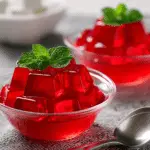
The Mounjaro Jello Recipe: The Natural Gelatin Trick for Appetite Control (2026) Is the snack that GLP-1 communities have been quietly swapping in online forums, Reddit threads, and TikTok wellness groups for the past year — and honestly, once you try it, you will completely understand why. If you have ever found yourself staring into the fridge at 4 PM, not even hungry but just Searching For something to eat, this recipe was built for exactly that moment. It is low-calorie, surprisingly satisfying, and takes less than 15 minutes of active prep time. Pure comfort on a plate — except it wobbles. Learn more in our article about Bowl Baked Oatmeal Recipes.
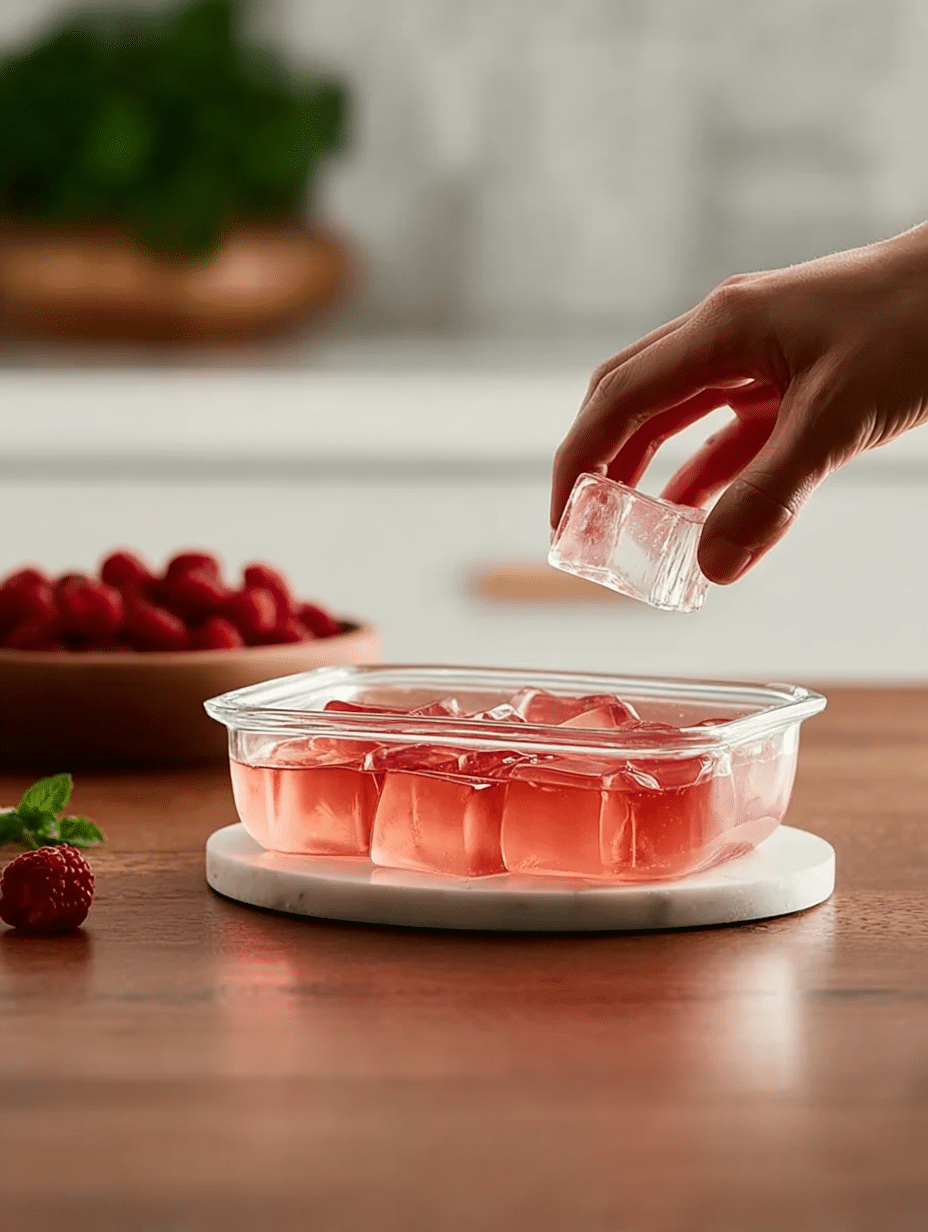
Table of Contents
Here is the quick answer you need before we go any further: Learn more in our article about Tropical Strawberry Colada Smoothie.
In 2025 and into 2026, the concept of “food noise reduction” became one of the biggest conversation topics in GLP-1 support communities. People on tirzepatide (Mounjaro) and semaglutide started actively looking for whole-food snacks that could extend the appetite-suppressing window between doses. This recipe blew up in those spaces because it hits every single requirement: gentle on a sensitive stomach, naturally high in protein, deeply simple to prepare, and genuinely good to eat. Reddit’s r/Mounjaro and r/Ozempic communities both saw versions of this recipe go viral multiple times throughout 2025. TikTok wellness creators picked it up from there, and now it is one of the most-searched gelatin snack recipes heading into 2026.
The Science Behind Gelatin and Appetite Control
How Does Gelatin Help with Appetite?
Gelatin is not just the wobbly stuff from a childhood birthday party. It is a cooked form of collagen — the most abundant protein in the human body — and it is loaded with an amino acid called glycine. Glycine does something really interesting inside your digestive system. It slows the rate at which your stomach empties its contents into the small intestine, which means you feel full longer after eating something that contains gelatin. On top of that, glycine interacts with gut hormones — including GLP-1 itself, the hormone that Mounjaro works to mimic — to send satiety signals to your brain. You eat less without feeling deprived. That is the whole mechanism, and it is genuinely backed by research on protein-induced satiety.
Grass-fed gelatin also supports the integrity of your gut lining. For people on GLP-1 medications who sometimes experience nausea, loose stools, or general GI sensitivity, a healthy gut lining is not a small thing. The glutamine and glycine in high-quality gelatin actively help repair and maintain that lining. Think of it as a soothing, protective coating for your digestive tract every time you eat a serving of this recipe. And because the Mounjaro Jello Recipe uses grass-fed gelatin rather than a standard boxed mix, you are getting a meaningfully higher glycine concentration per gram — with zero artificial additives that could trigger GI distress.
Why Combine Gelatin with a GLP-1 Lifestyle?
Here is where things get genuinely interesting. Mounjaro (tirzepatide) works partly by slowing gastric emptying — it makes food move more slowly out of your stomach so you stay full longer. Gelatin does a very similar thing through a completely different pathway. When you combine the two, you are stacking complementary mechanisms. The medication handles the hormonal signaling, and the gelatin adds a physical, protein-based fullness that reinforces the effect. It is not magic. It is just smart eating strategy.
There is also a muscle-preservation angle that matters a lot for long-term GLP-1 users. When you are eating significantly less food — which is common on tirzepatide — getting enough protein becomes critical. Without adequate protein intake, your body starts breaking down muscle tissue for energy alongside fat tissue. That is the last thing you want. Each serving of this recipe delivers around 5 grams of natural protein, and if you add the optional collagen peptides booster, that jumps considerably higher. It is a tiny, easy, low-calorie way to keep your protein intake moving in the right direction every single day.
- Does gelatin suppress appetite? Yes — glycine in gelatin slows gastric emptying and interacts with satiety hormones, helping you feel fuller for longer after eating.
- Is Jello good for weight loss on Mounjaro? Homemade gelatin Jello (not artificially sweetened boxed mix) can be a very effective low-calorie, high-satiety snack tool when used alongside GLP-1 therapy.
- Can I eat Jello while on tirzepatide? Generally yes — plain gelatin-based Jello is soft, low-calorie, and easy to digest. Avoid boxed mixes with aspartame if you are sensitive to artificial sweeteners on GLP-1 medications.
Mounjaro Jello Recipe Ingredients (Makes 6 Servings)
I keep my ingredients list tight and purposeful. Most recipes use way too much salt — and too many unnecessary add-ins that make a simple recipe feel like a chemistry project. This one stays clean. Here is everything you need for the base recipe, plus a separate list of optional boosters if you want to customize.
Base Recipe Ingredients
| Ingredient | Amount | Notes |
|---|---|---|
| Unflavored grass-fed gelatin powder | 2 tablespoons (about 0.5 oz) | Knox or Great Lakes brand recommended |
| Cold water (for blooming) | ½ cup | Must be cold — not warm, not room temp |
| Boiling water | 1½ cups | Used to dissolve the bloomed gelatin completely |
| Unsweetened tart cherry or pomegranate juice | 1 cup | Natural anti-inflammatory; sub any 100% juice |
| Fresh lemon juice | 2 tablespoons | Brightens the flavor and adds vitamin C |
| Raw honey or monk fruit sweetener | 1–2 tablespoons | Monk fruit for zero-calorie option; adjust to taste |
| Sea salt | ⅛ teaspoon | Enhances electrolyte balance — just a pinch |
Optional Boosters
| Booster Ingredient | Amount | Why Add It |
|---|---|---|
| Collagen peptides powder (unflavored) | 1 scoop (approx. 1 oz) | Boosts protein for muscle preservation on GLP-1 |
| Apple cider vinegar | 1 teaspoon | May help with blood sugar stabilization |
| Ginger juice or ground ginger | ½ teaspoon | Aids digestion, reduces nausea common with GLP-1 meds |
| Magnesium glycinate powder | ¼ teaspoon | Supports sleep and muscle function |
Equipment Needed
- Medium mixing bowl
- Small saucepan or kettle (to boil water)
- Whisk
- Measuring cups and spoons
- 6 individual silicone molds Or One 9×9 inch glass dish
- Refrigerator
That is truly it. I hate gadgets that clutter up the counter, but a good silicone mold is one tool I genuinely love — it makes each serving feel like its own little treat rather than a slab cut from a pan. That psychological distinction matters more than you would think, especially when you are trying to make healthy snacks feel satisfying and fun.
Step-by-Step Instructions: How to Make Mounjaro Jello
Start with the bloom. Pour your ½ cup of cold water into a medium mixing bowl, then sprinkle the 2 tablespoons of grass-fed gelatin powder evenly over the surface. Do not stir it. Just let it sit undisturbed for a full 5 minutes. What you are watching for is the gelatin absorbing that cold water and turning spongy — almost like a thick, wrinkled skin forms across the top of the bowl. This step is non-negotiable. Skipping it or rushing it causes clumping that never fully dissolves no matter how long you whisk, and you end up with a grainy, lumpy texture that nobody wants. The bloom is what gives this Mounjaro Jello Recipe its buttery, silky smooth consistency from the very first bite.
Next up, the dissolving stage. Once your gelatin has fully bloomed, pour 1½ cups of boiling water directly over it and whisk vigorously for 2 to 3 minutes straight. You are going for a completely clear, lump-free liquid — no dark granules floating around, no gritty bits clinging to the sides of the bowl. Hold the bowl up toward a window or a light source after whisking. If you can see tiny dark specks suspended in the liquid, keep whisking. Undissolved gelatin will create uneven soft spots in the finished jello, and the whole batch will set inconsistently. Two solid minutes of whisking is all it takes. Your arm will be fine.
Now for the best part — building the flavor. Add your 1 cup of tart cherry or pomegranate juice, 2 tablespoons of fresh lemon juice, your sweetener of choice (1 to 2 tablespoons of raw honey or monk fruit), and just ⅛ teaspoon of sea salt. Whisk everything together until fully combined. The mixture will turn a deep, gorgeous ruby-red color and smell incredible — bright, tart, and just a little floral from the honey. If you are using any of the optional boosters, this is exactly the right moment to add them. The liquid is still warm enough to incorporate collagen peptides and ginger without clumping, but cool enough not to damage heat-sensitive ingredients like apple cider vinegar.
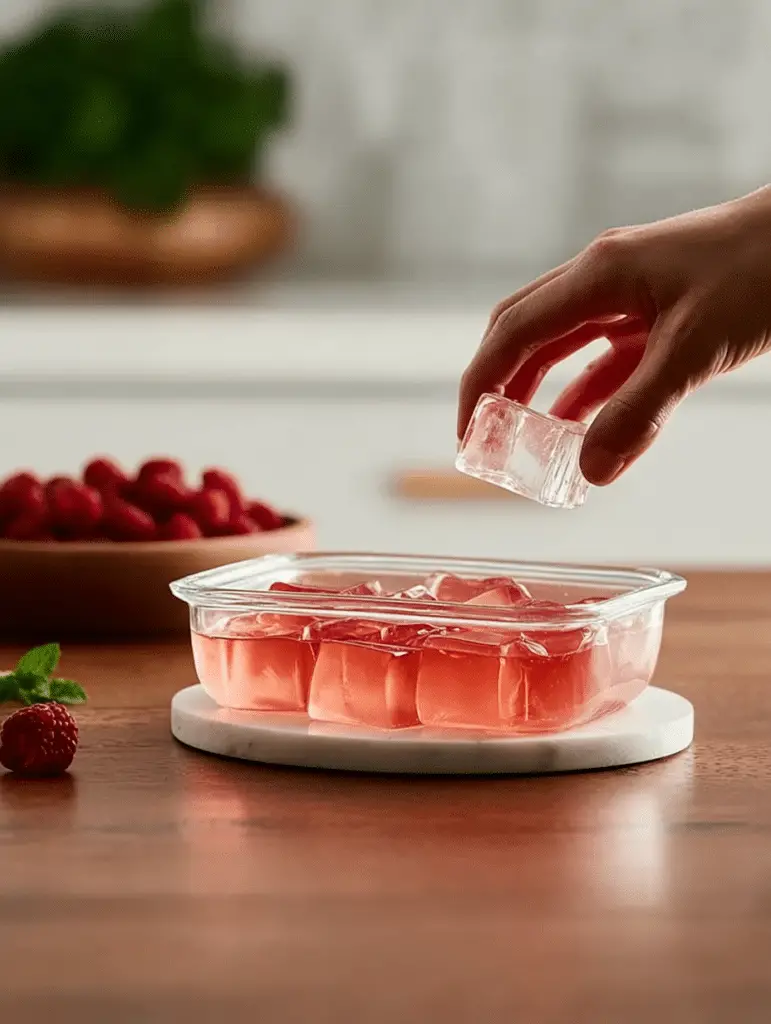
I once used the wrong size pan and everything overflowed in the oven. What a mess to clean up. That was a baking disaster, not a jello disaster — but it taught me to always double-check my vessel size before I pour anything anywhere. Same rule applies here. Make sure your 9×9 glass dish or your 6 silicone molds are actually large enough to hold the full batch before you start pouring. The total volume of this recipe is roughly 3 cups of liquid, which fills a 9×9 dish to about ¾ inch depth. That is exactly right. Each serving unmolds cleanly and slices neatly at that depth.
Meanwhile, let the mixture cool for about 10 minutes at room temperature before you pour it into your molds. You want it warm but not hot — somewhere around 100°F to 110°F is ideal. Test it by dipping a clean fingertip in: it should feel comfortably warm, like a bath, not scalding. This cooling window matters because pouring while the liquid is still too hot can activate enzymes in the fruit juice that break down the gelatin structure before it has a chance to set. The result? A batch that never firms up, just sits there as flavored liquid forever in your fridge. Once cooled, pour slowly and evenly into your chosen vessel, then cover loosely with plastic wrap or a fitted lid.
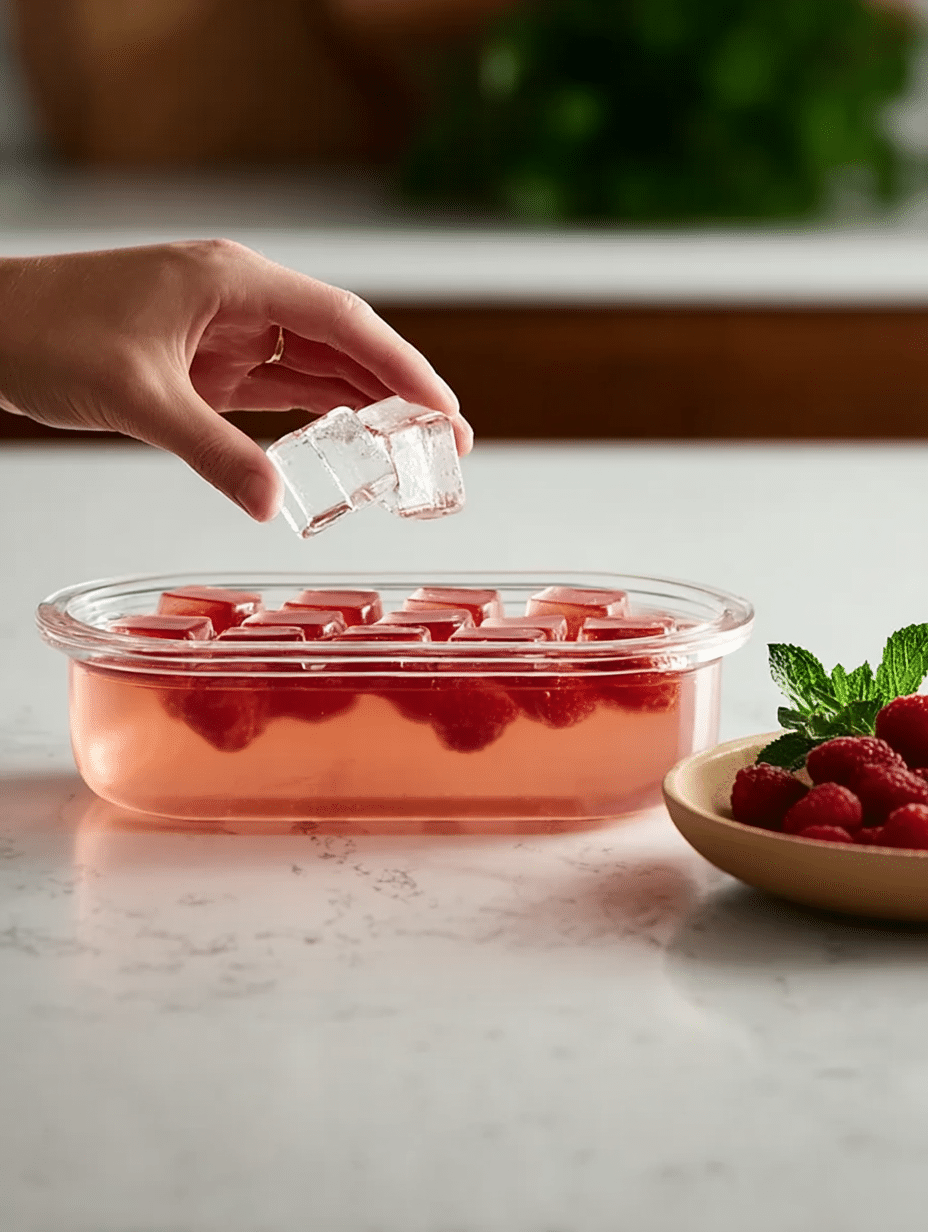
The final step is the one that requires the most patience — refrigeration. Slide your filled molds onto a flat shelf in the refrigerator and leave them alone for a minimum of 4 hours. Overnight is genuinely better. The texture after a full overnight chill is noticeably more firm, clean, and sliceable than a 4-hour set. One critical rule: do not put this in the freezer to speed things up. Freezing completely destroys the gelatin network — you end up with a watery, grainy mess when it thaws. The fridge is the only option, and the wait is worth every minute. When you pop those molds the next morning and see those perfectly set, jewel-toned squares of this Mounjaro Jello Recipe sitting on your plate, you will know immediately that this one’s a keeper. Store any leftovers in an airtight container in the refrigerator for up to 5 days — though in my experience, they rarely last that long.
Pro Tips for the Best Mounjaro Jello Recipe Results
I’ve made this recipe more times than I can count. And yes, I’ve messed it up a few times too. Here’s everything I’ve learned so you don’t have to learn the hard way.
-
Bloom your gelatin every single time. I know it feels like an extra step. But skipping it is the number one reason your jello ends up lumpy or never fully sets. Pour the gelatin over cold water — not warm, not room temperature — and let it sit undisturbed for a full 5 minutes. You’ll see it puff up and turn spongy. That’s exactly what you want. This is the step that makes the difference between silky-smooth jello and a grainy mess.
-
Whisk like you mean it when dissolving. Once you pour that boiling water over the bloomed gelatin, whisk vigorously for at least 2–3 minutes. Hold the bowl up to the light. Any tiny dark specks you see are undissolved granules. Keep whisking until the liquid is completely clear. This is non-negotiable for a smooth final texture.
-
Go easy on the salt — most recipes use way too much. My hot take? This is completely true for jello recipes too. The 1/8 teaspoon of sea salt in this Mounjaro jello recipe is there to enhance electrolyte balance, not to season the food. Don’t be tempted to add more. The sweetness from your juice and honey will sing much more clearly when salt isn’t crowding it out.
-
Let the mixture cool before you pour. Pouring while too hot — above 115°F — can cause enzymes in your fruit juice to break down the gelatin structure. You’ll end up with a jiggly mess that never fully firms up. Give it 10 minutes on the counter. You want it warm to the touch but not hot. Around 100°F–110°F is the sweet spot. If you want to add the Ginger-Turmeric Anti-Nausea variation (1 tsp fresh ginger juice + 1/4 tsp turmeric + a pinch of black pepper), this cooling stage is when you stir those in. Same goes for a splash of apple cider vinegar if you want blood sugar support built right in.
-
Batch prep it on Sunday. This jello keeps in the fridge for up to 5 days. So make a full batch at the start of the week and you’ve got a foolproof and delicious snack ready every single day. Six servings, six days — done. Use individual silicone molds for easy grab-and-go portions. Even fun shapes like gummy bears make this feel like a treat rather than a “diet food.” And honestly? That mental shift matters.
-
Know your gelatin-to-liquid ratio. Two tablespoons of gelatin to 2.5 cups total liquid gives you a firm, sliceable jello. If you prefer something softer and more spoonable — which some GLP-1 users find easier to tolerate when nausea hits — drop the gelatin to 1.5 tablespoons. You’ll get a tender, jiggly texture that’s much gentler to eat. Want something firmer that holds up as a finger food? Go up to 2.5 tablespoons. This flexibility is what makes the Mounjaro jello recipe so adaptable to how you’re feeling on any given day.
-
Boost your protein when you can. Each serving of the base recipe gives you about 5g of protein at around 45 calories — solid for such a light snack. But if you’re on GLP-1 therapy and working to protect your muscle mass, stir in one scoop of unflavored collagen peptides or whey isolate at Step 3 (while the mixture is still warm). This bumps the protein up significantly without changing the texture or flavor. Pairing this with other high-protein choices throughout the day, like a bowl of Bowl baked oatmeal At breakfast, gives you a really solid nutritional foundation while your appetite is naturally reduced.
Storage and Make-Ahead Notes
Store your finished jello in an airtight container in the refrigerator and it will stay perfectly fresh for up to 5 days. If you used individual silicone molds, pop them out after setting and transfer them to a lidded container lined with parchment paper so they don’t stick together. Do Not Freeze this recipe — freezing destroys the gelatin’s protein structure and you’ll end up with a watery, grainy texture when it thaws. There’s no fixing that. No reheating needed either; this one is always served cold, straight from the fridge. Pull it out, top it with a spoonful of full-fat Greek yogurt if you like, and you’re good to go in under a minute.
You might also like
Discover more delicious recipes in our recipe collection.
Frequently Asked Questions
Can I use regular Jell-O packets instead of grass-fed gelatin?
You can, but I’d encourage you to try the grass-fed version first. Standard sugar-free Jell-O packets contain artificial sweeteners like aspartame or sucralose, artificial dyes, and very little actual protein — roughly 1g per serving compared to the 5g you get in this Mounjaro jello recipe. For GLP-1 users who are already dealing with heightened GI sensitivity, those artificial additives can trigger bloating, cramping, or nausea. The whole point of making this from scratch is to give your body clean, real ingredients that work With Your medication, not against it.
Why didn’t my jello set properly?
There are three likely culprits. First — you didn’t bloom the gelatin in cold water before adding the boiling water. That step is essential. Second — you poured the mixture while it was still very hot, which can interfere with the gelatin’s ability to set, especially when fruit juice enzymes are involved. Third — and this is a big one — you may have used fresh pineapple, kiwi, or mango juice. Those fruits contain enzymes that literally break down gelatin proteins. Always use pasteurized or canned versions of those juices, or stick with tart cherry, pomegranate, or citrus for guaranteed results.
How many servings should I eat per day on Mounjaro?
Start with just 1 serving (about 1/2 cup) per day and see how your body responds. Most people on GLP-1 therapy find 1–2 servings daily works well — one before a meal to pre-load the stomach, and one in the evening to quiet late-night cravings. Don’t go beyond 4 servings per day. Consuming more than roughly 30g of gelatin daily can cause loose stools in some people, which is the last thing you want when you’re already managing GI side effects from tirzepatide.
Can I add this to a smoothie instead of eating it as jello?
Absolutely — and that’s a creative way to use it. You can let the jello set, then blend a serving into a smoothie like this Tropical strawberry colada smoothie For a natural protein boost without any powder taste. The gelatin will break down into the liquid. Just know that blending it means you lose the volume-filling “set” texture that makes this Mounjaro jello recipe so effective at pre-loading the stomach — but you still get all the amino acid and appetite-support benefits of the gelatin itself.
Is this recipe suitable if I’m not on GLP-1 medication?
One hundred percent yes. This recipe works for anyone looking for a low-calorie, high-satiety snack made from natural ingredients. The gelatin supports gut health, joint recovery, and appetite regulation whether you’re on medication or not. It pairs beautifully with other whole-food snacks — think Homemade granola clusters For a little crunch alongside your jello for a snack plate that feels satisfying without being heavy. This one’s a keeper for the whole family, not just those on a specific wellness protocol. Pure comfort on a plate — and foolproof and delicious to boot.
Mounjaro Jello Recipe: The Natural Gelatin Trick for Appetite Control (2026)
Ingredients
Method
- Pour ½ cup of cold water into a mixing bowl, sprinkle gelatin over it, and let it bloom for 5 minutes without stirring.
- Pour 1½ cups of boiling water over the bloomed gelatin and whisk vigorously for 2-3 minutes until completely clear.
- Add 1 cup of juice, 2 tablespoons of lemon juice, sweetener, and salt, whisking until combined. Add optional boosters if desired.
- Let the mixture cool for 10 minutes, then pour into molds or a dish. Refrigerate for at least 4 hours or overnight.
- Unmold or slice the jello and store leftovers in an airtight container in the refrigerator for up to 5 days.